Shipping custom cookies across the country is an incredible way to scale a home bakery beyond your local geographic radius. A single viral Instagram reel featuring your intricate royal icing designs or distinct, massive 6-ounce gourmet cookies can generate orders from hundreds of miles away in a matter of hours.
But scaling nationally comes with a terrifying logistical challenge: the postal system.
Throwing three dozen delicate sugar cookies into a standard cardboard box and hoping for the best is a guaranteed recipe for furious customers, devastating chargebacks, and terrible reviews. Your cookies will be dropped, kicked, crushed under 50-pound boxes, and subjected to extreme temperature swings.
Your packaging strategy must be bulletproof. This guide breaks down the best packaging for shipping cookies so they arrive looking exactly as perfect as when they left your kitchen.
1. The Foundation: Heat Sealing is Non-Negotiable
Before a cookie ever touches a piece of bubble wrap or a shipping box, it must be individually heat-sealed.
- Freshness: A commercially heat-sealed cellophane bag prevents moisture loss, ensuring your cookies taste incredibly fresh even if they spend five days in transit.
- Protection: Royal icing can bleed or stick if exposed to humidity. The bag creates a micro-environment.
- Sanitation: Customers are significantly more comfortable receiving individually sealed treats that have not been exposed to the dusty interior of a cardboard shipping box.
What you need:
- A dedicated Impulse Heat Sealer (8-inch or 12-inch).
- Correctly sized polypropylene (cello) bags. Do not use standard ziplock sandwich bags; they look incredibly unprofessional and do not hold a true airtight seal.
2. Inner Packaging: The "Box Within a Box" Method
The golden rule of shipping fragile baked goods is the "Box Within a Box" method.
The cookies themselves should never touch the outer walls of the shipping container. They need an internal structural defense layer.
Step 1: The Inner Bakery Box
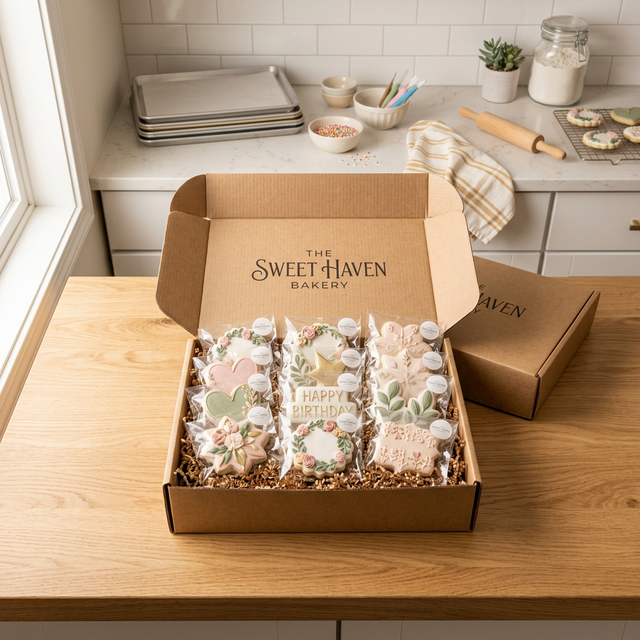
Once your cookies are heat-sealed, stack them carefully inside a sturdy, branded bakery box.
- For decorated royal icing sugar cookies, layer them flat with a sheet of food-safe cushioning (like a thin layer of bubble wrap or cushioned paper) between each tier. Do not stack them high; they are top-heavy and the icing will crack under pressure.
- For thick gourmet drop cookies, you can stack them vertically (like tires side-by-side) or tightly nested in a deep bakery box.
Crucial Test: Once the cookies are in the inner box, close it and gently shake it. If you hear the cookies sliding around or rattling, stop. Add more filler (tissue paper, crinkle cut paper) until the cookies are completely immobilized. Movement equals breakage.
Step 2: The Outer Shipping Corrugated Box
Place the filled inner bakery box inside a heavy-duty, corrugated outer shipping box.
- The outer box should be at least 2 inches larger on all sides than your inner bakery box.
- You must fill this 2-inch gap completely with shock-absorbing material.
3. Shock Absorption: What Filler is Best?
Your outer box filler is the only thing protecting your cookies from a 4-foot drop off a conveyor belt at a sorting facility.
Option A: Standard Bubble Wrap
- Pros: Cheap, lightweight (saves on shipping costs), and offers incredible shock absorption.
- Cons: Terrible for the environment, extremely bulky to store in a home kitchen, and looks cheap to the end consumer.
- Verdict: It works flawlessly, but at a cost to your aesthetic and the planet.
Option B: Crinkle Cut Paper (Shredded Kraft Paper)
- Pros: Looks incredibly high-end when the customer opens the box, very customizable (it comes in endless brand colors), and eco-friendly.
- Cons: It is heavy. Adding half a pound of paper shred to your box might push your package into a higher USPS shipping tier, eating into your profit margins. It also compresses over time, so you have to pack it very tightly.
- Verdict: Excellent for luxury gifting, but monitor your shipping weights carefully.
Option C: Hexagonal Honeycomb Packing Paper
- Pros: The best modern alternative to bubble wrap. It stores completely flat (saving you massive amounts of space), expands when stretched to create interlocking protective cells, looks highly professional, and is 100% recyclable.
- Cons: Slightly more expensive per foot than standard bubble wrap.
- Verdict: This is the undisputed winner for modern, artisan home bakeries shipping goods in 2026.
4. Choosing the Right Carrier (USPS vs. UPS)
Once you have packed a bulletproof box, you have to hand it over to a carrier.
- USPS Priority Mail: Generally the cheapest option for packages weighing between 1 and 3 pounds (which covers most 1-2 dozen cookie shipments). Priority Mail includes $100 of free insurance and usually arrives in 2-3 days. Their free Priority Mail boxes (which you can order online and have delivered to your house) save you the cost of buying outer shipping boxes.
- UPS Ground: Often faster and more reliable than USPS for heavier packages or regional shipments (within 2-3 states of your location). UPS tracking is generally considered superior and updates more frequently. In 2026, UPS Ground is highly competitive for heavier gourmet cookie shipments.
Pro Tip: Never buy shipping labels directly at the post office counter. Use a third-party shipping software (like Pirate Ship or Shippo) to access heavily discounted commercial pricing rates. It will save you 20-40% per label.
How CakeVision Simplifies Shipping
Figuring out 2-day priority rates and complex packaging is hard enough. You do not also need the headache of collecting complicated shipping addresses and calculating wildly varying shipping zones through endless Instagram DMs.
CakeVision's automated ordering system takes the pain out of the intake process. Your followers click a link, view your specific shipping menu, input their exact shipping address, and submit the order properly—while you get a perfectly clean digital order log ready for label printing.
Ready to let customers design their cake?
Set up your AI-powered cake design tool in under 3 minutes. Free to start.
Start FreeFAQ
How do I prevent my royal icing designs from bleeding during shipping?
Bleeding royal icing is almost entirely a humidity issue. Ensure your icing is 100% dry (this can take 12-24 hours depending on the climate) before heat-sealing the cello bag. If you seal a cookie that is still releasing moisture, that moisture will get trapped in the bag, melt the sugar, and cause the dark colors to bleed into the lighter areas.
Do I need to mark the outside of the box as "Fragile"?
Yes, it is best practice to use stark red "Fragile" stickers on the outside of your corrugated box, but do not rely on them. Sorting facilities are heavily automated; conveyer belts and sorting machines cannot read stickers. Pack the box assuming it will be dropped regardless of what the sticker says.
What should I do if a customer complains their cookies arrived broken?
This is why shipping insurance (like the $100 included with USPS Priority Mail) is critical. Have a clear, public store policy stating that you are not responsible for carrier damage, but offer excellent customer service anyway. Ask the customer to send you a photo of the damaged box and the broken cookies immediately. You can then file a claim with the carrier and use the payout to refund the customer or send a replacement batch.