One of the greatest advantages of starting a home bakery is the incredibly low barrier to entry. You do not need to sign a $5,000-a-month commercial lease or take out a massive business loan to purchase industrial rotary ovens. You just need your kitchen, your skills, and a solid financial plan.
However, the "low cost" illusion can be incredibly dangerous. Many incredible bakers decide to sell their cakes, spend a few hundred dollars on ingredients, and suddenly realize they are losing money because they failed to account for packaging, insurance, and the relentless cost of business overhead.
Before you take your first official custom order, you need to deeply understand your home bakery start up costs. This detailed breakdown will show you exactly what to expect in 2026.
1. Statutory, Legal, and Admin Costs ($150 - $600)
If you treat this like a hobby, you will get paid like a hobby. Treating it like a business starts with legal compliance.
- Cottage Food Permit / Registration: Depending on your state, this ranges from completely free (e.g., Texas) to a couple of hundred dollars annually if an inspection or detailed application is required. ($0 - $150)
- Food Handler’s Certificate: A required short online safety course. ($10 - $25)
- LLC Formation (Optional but Recommended): Setting up a Limited Liability Company protects your personal assets (like your house and car) if your business is sued. Filing fees vary wildly by state. ($50 - $500)
- Business Liability Insurance (FLIP / Next Insurance): This is non-negotiable. If you bake a cake and someone gets sick, your homeowner's insurance will absolutely not cover the business liability. A policy designed for food businesses is usually very affordable. ($250 - $300/year)
2. Kitchen Equipment Investments ($300 - $1,500+)
You do not need to buy everything at once, but attempting to run a high-volume custom cake business with a hand-mixer will burn out the motor (and your arms) within a month.
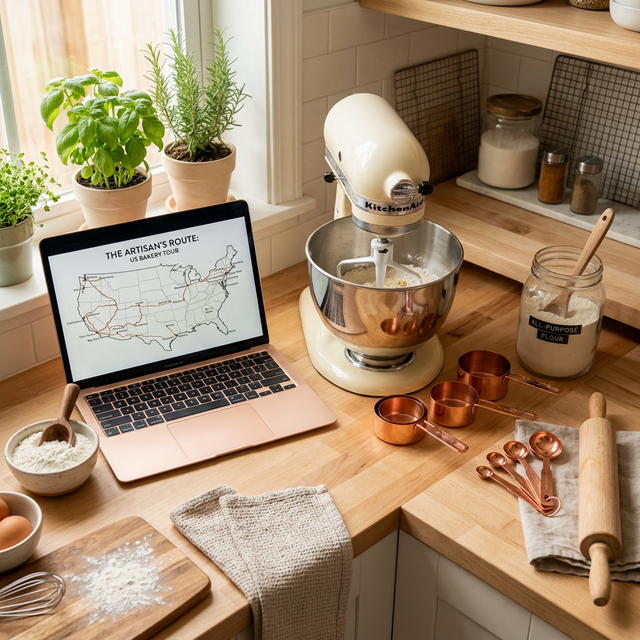
- Heavy-Duty Stand Mixer: A 5-quart to 7-quart professional-grade stand mixer (like a KitchenAid Commercial or high-end bowl-lift model) is the workhorse of your kitchen. ($400 - $800)
- Extra Mixer Bowls and Attachments: Stopping to wash a bowl between making the cake batter and whipping the buttercream is a massive waste of time. Buy at least two extra bowls and paddle attachments. ($150)
- Baking Pans: High-quality, straight-sided aluminum cake pans (Fat Daddio's or similar) in 6-inch, 8-inch, and 10-inch sizes. Buy them in sets of three so you can bake entire tiers simultaneously. ($80 - $120)
- Decorating Tools: Professional turntables, large offset spatulas, bench scrapers, piping bags, a massive array of professional piping tips, and a quality food scale (because baking by volume instead of weight is bad for business). ($100 - $150)
- Storage and Organization: Airtight commercial-grade ingredient bins for your bulk flour and sugar. ($50 - $100)
3. Initial Inventory: Ingredients and Packaging ($200 - $500)
You cannot bake a custom cake without the raw materials, and you certainly cannot hand a $200 wedding cake directly into someone's hands without a box.
- Bulk Ingredients: 50-pound bags of flour, 25-pound bags of sugar, bulk premium cocoa powder, large bottles of high-quality vanilla extract, and specialized food colorings (gel colors are strictly required; liquid food coloring will ruin your buttercream). ($100 - $250)
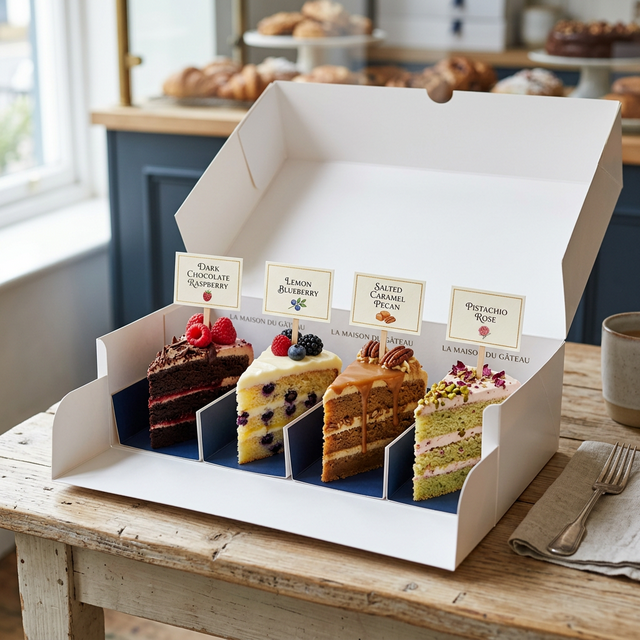
- High-End Packaging: Corrugated heavy-duty cake boxes, greaseproof cake boards, cake drums (for tiered cakes), dowels, parchment paper, and cellophane bags for cookies. ($100 - $200)
- Branding Logistics: Custom logo stickers, ribbon, and printed care cards ("How to cut your custom cake") elevate your product from "homemade" to "artisan boutique." ($50 - $100)
4. Software, Marketing, and Operations ($50 - $100/month)
You can have the most beautiful cakes in the world, but if your ordering process is a chaotic mess of Instagram DMs, you will immediately lose high-paying clients.
- Website / Storefront: You need a digital home. Instead of paying for an expensive Shopify setup just to deal with clunky order forms, modern home bakers use tools specifically designed for their workflow.
- Custom Cake Ordering Software: A subscription to software like CakeVision replaces scattered DMs. It acts as your storefront, guides the customer through a questionnaire to gather exact details, visually designs the cake with AI to prevent miscommunication, and sends you a clean, organized order email. ($29/month)
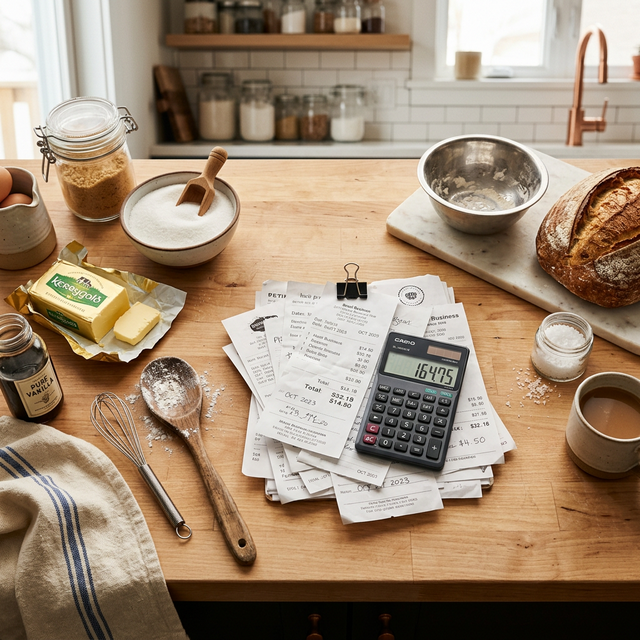
- Accounting Software: A simple subscription (like QuickBooks Self-Employed or Wave) to track your expenses and prepare you for tax season. ($0 - $20/month)
The Total Financial Picture
If you add it all up, the minimum safe amount to launch a professional, legally compliant, well-branded home bakery is roughly $1,000 to $2,500.
If you already own a heavy-duty stand mixer and quality pans, your startup costs can drop well below $1,000.
Why You Shouldn't Cut Corners
It is tempting to skip the liability insurance, buy cheap grocery-store food coloring, and operate your entire business via Instagram DMs to save money.
This is a mistake.
Clients who spend $200+ on a custom birthday cake or $800 on a wedding cake expect a professional experience. They want a beautiful, branded box. They want a clean, professional online ordering flow that reassures them they are working with a real business. If you present yourself cheaply, you will attract cheap clients. If you invest in the foundation of your business, you can charge premium prices from day one.
Ready to let customers design their cake?
Set up your AI-powered cake design tool in under 3 minutes. Free to start.
Start FreeFAQ
Do I really need an LLC for a home bakery?
While a sole proprietorship is free and easy, it offers zero legal protection. If a customer gets sick or alleges an injury related to your product, they can sue you personally. An LLC (Limited Liability Company) creates a legal boundary, meaning only the assets of the business are at risk, protecting your personal savings and property.
How do I price my cakes to earn back my startup costs?
Your startup costs should NOT be lumped directly into the price of a single cake. Instead, they are part of your "overhead." Every custom order calculation should include your ingredient cost, your hourly wage, a profit margin, AND an overhead percentage (usually 15-20%). This overhead margin gradually pays back your initial equipment investments over time.
Can I just use my standard home kitchen equipment?
You can start with what you have, but residential equipment will limit your scale quickly. A basic 4.5-quart tilt-head mixer will violently shake if you try to make a triple batch of stiff American buttercream. Upgrading to a heavy-duty commercial bowl-lift mixer is often the first significant investment a home baker must make.
Why should I pay for order software instead of using free Instagram DMs?
Instagram DMs are not designed for business management. Inquiries get lost, pricing conversations are impossible to track, and design alignment via text is a recipe for disaster. Using dedicated ordering software saves you hours of unpaid administrative work per week and elevates your brand's professionalism, allowing you to charge higher, premium prices.